Major Gas Mains Replacement Starts July 1st
June 29, 2009 by Rob Powell
A five month project by Scottish Gas Networks to replace old gas mains in Greenwich town centre will begin on July 1st. The utility company is spending £270,000 replacing metallic mains with new plastic piping that should last for a minimum of 80 years.
The works are taking place in Trafalgar Road, Romney Road and Nelson road, and require road closures during the replacement programme.
There will be three phases to the project:
Phase One: Work taking place in Greenwich Church Street, from number 8, along Nelson Road to just past the junction between Romney Road and King William Walk. Starting 1 July, for approximately 12 weeks, a series of diversions will be in place to enable the safe laying of a new main in an open trench.
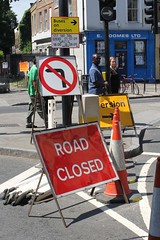
From 1 July, for approximately five weeks, the left turn from Nelson Road into Greenwich Church Street will be closed. Traffic will be diverted via Creek Road and Norman Road to Greenwich High Road, where motorists will continue along their intended route.
In addition, westbound buses on routes 177, 180 and 386 towards Greenwich South Street will also divert via Creek Road, Norman Road and Greenwich High Road to Greenwich South Street. Buses on route 199 coming from Surrey Quays will turn right from Creek Road into Norman Road and Greenwich High Road to Greenwich South Street.
The remainder of phase one will see the reinstatement of the left turn out of Nelson Road and two-way temporary traffic lights installed in Romney Road and King William Walk.
Phase Two: Work taking place along Romney Road to the junction of Trafalgar Road and Eastney Street. From 24 September, for approximately nine weeks, the bus lane will be closed but two-way traffic will be maintained.
Phase Three: Work taking place along Trafalgar Road from the Eastney Street junction to the junction with Hoskins Street. From 26 November, for approximately four weeks, temporary two-way traffic lights will be in place. Maze Hill will also be temporarily closed during this phase with diversions in place.
SGN Team Manager Gareth Lewis said: “We’ve been working closely with the Greenwich Council and the emergency services to find the most effective way to minimise overall disruption while carrying out this essential work. Advance warning and diversion signs will be in place throughout the course of our work and access to homes and businesses will be maintained”.
Andrew Gilligan: Progress Report
April 8, 2009 by Andrew Gilligan
THIS COLUMN has been going for just under six months, and there’s already been a bit of progress on some of the topics I’ve been banging on about in that time. I definitely wouldn’t claim credit – but perhaps in one or two cases, the publicity helped push things along a little.
One of my very first pieces, in October, attacked the “drift and decay” in Greenwich’s flagship shopping street, Nelson Road, with four shops empty and a general air of neglect. Three of the empty shops have now been filled, and not with chains either – not bad going in a recession – and the street has a perkier feel.
In February we pointed out the equally recession-salient fact that the small food shops of Greenwich were both cheaper, and offerered better quality food, than our main supermarket, Somerfield.
Now Dring’s the butchers in Royal Hill, one of the shops I mentioned, tells me that it has been shortlisted as “Best Local Shop” in the ITV London/ Smooth Radio Love London Awards. Congratulations, guys: thoroughly well deserved – I bought some chicken from Dring’s the other day and it was ace. Best of luck for the awards ceremony at the Cafe de Paris on 24 April.
Earlier this week, Boris Johnson announced that the Thames Clipper river service would take Oyster pay-as-you-go from November, something for which I campaigned in this space in February. Later this year, this column, my newspaper the Standard, a major think-tank and a number of key political figures in London will be making a great deal more noise about how to improve the riverbus: watch this space.
The biggest result against the forces of folly, though, has been in helping get TfL’s grotesque “Greenwich Waterfront Transit” completely cancelled, something which happened last week. As I wrote in November, this scheme sounded impressive – but was in fact nothing more than the world’s most expensive bus route.
It would simply have replaced the existing 472 service from North Greenwich to Thamesmead, using the same sort of rubber-tyred diesel buses, running at the exactly same frequency, and along almost exactly the same route and roads. (There would have been a tiny amount of new bus-only road in the Woolwich Arsenal development and in Western Way, near Belmarsh.)
It was the rest of us who would have noticed the difference. The GWT was expected to cost £20 million – absurd enough for a scheme offering no real new benefits beyond a fancy name. By this year, however, the cost had risen to £46 million – more than the entire annual bus subsidy for the whole of Wales!
The cancellation caused some predictable gibbering from the kind of people who still can’t accept that they no longer live in the golden days of economic boom and Ken Livingstone, with great tides of dosh lapping around to be flung at any pointless vanity project that shines in the light.
GWT’s demise left the people of the east of the borough “again bereft of an adequate transport network,” stormed Chris Roberts, Labour leader of Greenwich Council. “At a time when the Government is quite rightly looking for infrastructure projects to support the economy and keep people in work, the Mayor of London is cancelling them.”
One person Roberts’ furious denunciations understandably neglected to mention was the local MP, Nick Raynsford – also Labour – who said last year that he was dropping his support for the scheme because “I no longer consider it justifying the substantial costs involved.”
Raynsford is right. The GWT was in fact a conscious and gigantic con-trick on the long-suffering people of Thamesmead – deceiving them that they were getting, in Roberts’ words, a new “transport network” or “infrastructure project” when in fact they were getting neither of those things.
It would actually have reduced the chances of Thamesmead getting the real transport “infrastructure project” it needs, a tram or rail link, because the bureaucrats would have been able to wave the existence of GWT in the faces of anyone who asked.
So for the sake not just of taxpayer value but of the transport needs of the east of the borough, we should celebrate GWT’s demise this week.
Duel Of The Delis
November 6, 2008 by Andrew Gilligan
AFTER my last week’s moan about Nelson Road, I thought I’d say something nice about Greenwich shops for a change. To adapt the title of that bestselling book – is it just me, or are some things not quite as s–t as they were?
Books, we’ve even got a shop selling them now. New ones. We’ve got an M&S. We’ve got a fishmonger, tucked away down Circus Street. We’ve got a decent independent wine merchant, in Trafalgar Road.
And over the last couple of years, Greenwich, a place where the pinnacle of cosmopolitan eating was once the red Peperami, seems to have got itself several rather nice-looking bakery/ delis.
Well, all right, they’re not all strictly delis, they’re deli-ish – but look, I’m calling them that so we can headline this piece “Duel Of The Delis.” Alliteration, right? We hacks love alliteration.
They might not all be delis, but there certainly could be a bit of a duel because over the last three years or so a comparatively small area, West Greenwich, has gone from no deli-type places at all to four. They keep opening more of the things. Earlier this week, I took the carrot cake challenge.
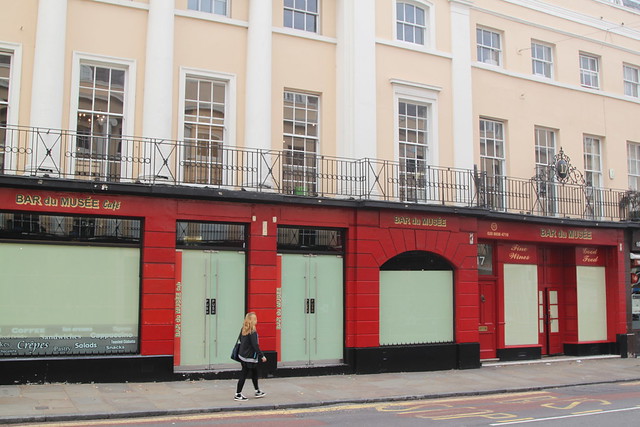
I started with the oldest of the new places, what was once the “George” cafe/deli in Nelson Road, now more cafe than deli and rebranded as the Cafe du Musee. It’s joined to two other “Musee” shops, including the original bar, and it’s part of Frank Dowling’s Inc empire, of which I’ve not always been the topmost fan.
As I was standing there, making some notes about the furnishings, Frank himself, who I’ve never actually met before, suddenly came through the door specially to shake my hand (this sort of thing doesn’t happen as often as I’d like, by the way.) Had he spotted me on CCTV? Is he having me followed? “Be nice, we’re trying,” he said, before leaving just as quickly as he’d come.
You know what, Frank, I will be nice. Your shop was just a smidgeon clinical, with its black slate floor and its chandeliers – though it does have a nice grandfather clock – but actually, your carrot cake was pretty damn good, moist, generously-sized, worth the £3.25, I thought. So no green inc from me about you this time.
Then it was round the corner to Rhodes, the rather stylish new bakers (est 2008) opposite the entrance to the naval college (don’t think it’s any relation to the celebrity chef Gary, which is probably just as well.) The window is stacked with shelves of cakes but the price tickets are strategically turned away from the street. If you saw them from the outside (£2.20 for a baguette) you might never cross the threshhold.
And that would be a mistake, because this is an attractive place, with friendly service, better than the Musee, some of it with a calm North American accent. They’re attentive, they approach you – although once I’d ordered and they’d put it at the till, they wandered off, leaving me a bit stuck when I wanted something else.
They didn’t have any carrot cake when I went in, so I got a sort of fruit Danish, which was good and light and had quite a decent collection of fruit in the middle Unfortunately the other thing I chose, the ham and cheese croissant, was duff: tasteless cheese, rubbery at the edges.
On the admirable Greenwich Phantom blog, Rhodes is accused of charging 70p for a scrape of butter – “which was actually margarine” – to put on an 80p scone. Didn’t check it myself, but if true, remarkably bad form, guys. Prices and consistency are the issues here.
Next stop the Nevada Street Deli, in what used to be the Spread Eagle second-hand bookshop. I miss those floors of old paperbacks, stretching away like Gormenghast, but if it had to go, this is a good replacement. “Poilane delivered every Saturday,” says a little blackboard in the window. I had a tasty sausage roll and anchovies on bread – they do light meals too – and I was well served, though gently ticked off for eating my Rhodes fruit tart thingy on the premises.
This is easily the nicest place to sit in of the four, though alas there are only two full-sized inside tables, plus a further three seats perched in the window. The reason I’d never been in before was I’d never seen a table free before.
Finally, the Buenos Aires, tucked away down non-touristy Royal Hill with, I think, the best food of the bunch. It’s Argentinian, you might guess, but not perhaps quite as Argentinian as you might hope. The Argie pastries are fab but the savouries are a bit more Med than Latin America. Lots of my neighbours love the squashy leather sofas, but I have bad memories of trying not to spill hazardous hot drinks while sinking into them.
In all of these places you can, if I’m honest, get that slight, rather SE10, sense that they’re good without being absolutely outstanding. The long-established Italian deli in East Greenwich – which was closing, but may now not be – remains the local standard to beat for quality and variety. But with the arrival, now, of four newish places doing similar things, the magic of competition may raise everyone’s game. In the tough times ahead, they all deserve to survive. Let’s hope they all do.
Greenwich Market and Nelson Road Face Drift and Decay
October 28, 2008 by Andrew Gilligan
LIKE the admiral it’s named for, Nelson Road is looking rather one-eyed these days. When Joseph Kay rebuilt the town centre for its owners, Greenwich Hospital, in 1829, he made it south London’s most elegant shopping street. Even a few years ago, it still rose some way above the general tat lining the three other sides of the one-way system.
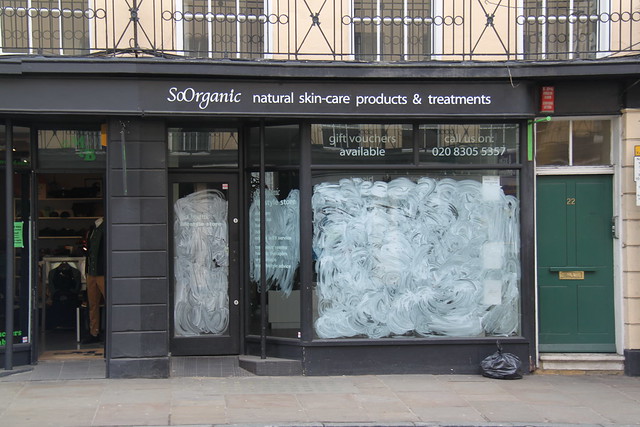
Today, however, the Roman-lettered shop-signs have been ousted by corporate screamers in orange and pink. The art galleries, florists, antique dealers and second-hand bookshops of the 1990s have made way for noodle bars and a teen fashion store.
Frank Dowling’s Inc Group has gobbled up half one side of the street, with three neighbouring Bar du Musee franchises (see right); a fitting symbol of the unstoppable spillage of Inc that is blotting our town. Most of all, there are the four empty shops – including both the two which bracket the passageway to the market. One of these has been vacant for around eighteen months.
Ah yes, you say – the market. Could all this have anything to do with Greenwich Hospital’s grand masterplan to redevelop the place, which was briefly “consulted on” last year in one of the empty shops? They said they would make their planning application by this summer. But just as the summer weather went missing this year, so did the application. Nothing, so far, has gone in.
So what actually is happening? Does Nelson Road’s decay mean that the masterplan is drifting? Or is it some devious scheme to make the new development look less bad by comparison?
Neither, says David McFarlane, the Hospital’s spokesman. “There is no intention to keep shops vacant,” he insists. And the planning application for the market redevelopment is “still very much full steam ahead.” It has, however, been delayed. “It is now more likely,” he says, “that the planning application will be submitted in spring 2009.” Sounds like a little bit of drift to me, David.
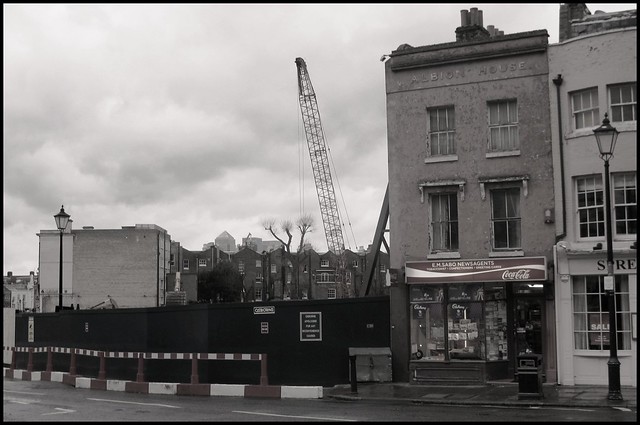
The reason for the delay, says Mr McFarlane, is that the scheme’s had to be revised “as a result of the consultation and trying to keep the cost base down.” In last year’s blueprint, they wanted to demolish the 1950s buildings immediately surrounding the market, replacing them with new shops and a “small hotel.” The roof over the stall area would be raised two storeys in height and made of glass, creating more of a shopping-mall experience.
In the revised scheme, the 50s buildings still go, the new shops still come, but the hotel becomes very far from “small.” It will now be around a hundred rooms, a very substantial size – with all the traffic, pickups and dropoffs that that implies. The roof over the market will no longer be glass, says Mr McFarlane, but a sort of translucent canvas, rather like that used in the National Tennis Centre at Roehampton. None of this is final, he says, but “a work in progress.”
Two other key issues have yet to be settled. Where do the market stallholders go for the two years the place is being rebuilt? It’s not yet clear. Cutty Sark Gardens, one option for a temporary site, appears to have been blocked by the council.
The application for the new market, and the application for the temporary one, were to have been submitted together. Now, it seems, they may be separate. Could that imply no temporary market? No, insists the Hospital. “If there isn’t a temporary market, there will be a question mark over the whole development. The Hospital can’t shut down the market for two years, lose the income and not make it up somewhere else.”
But the biggest unsettled issue of all, of course, is the banking meltdown and the credit crunch. Redevelopments are being cancelled all over London. And if shoppers stop shopping, which retailer will want to take space in the new, larger shops that are planned for Greenwich?
McFarlane is upbeat, saying the Hospital is unusually well-capitalised, with substantial reserves. But if that’s so, why rework the scheme to reduce costs? I have a feeling the tangled saga of the market could have another few twists to go. Nelson might not get his eye back any time soon.