London 2012 planning application to be decided March 23rd

March 12, 2010 by Rob Powell  

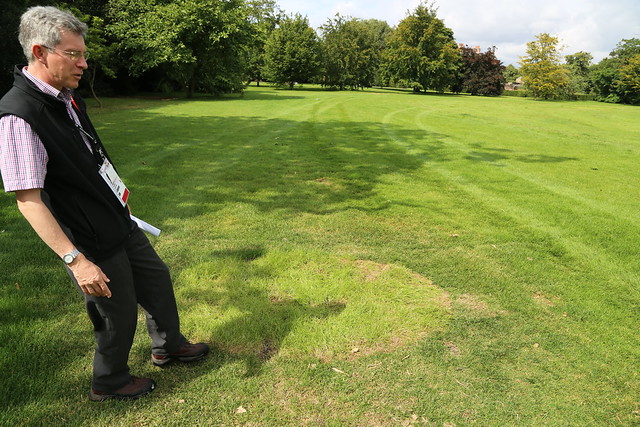
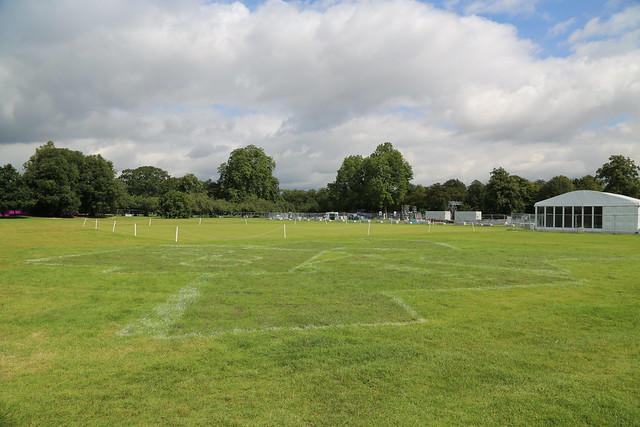
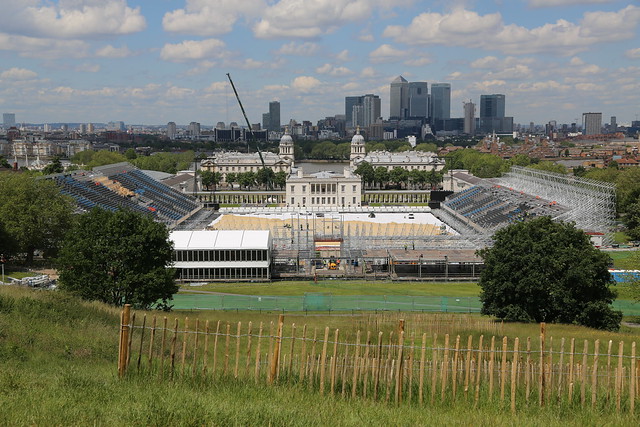
The planning application to use Greenwich Park at London 2012 will be decided by a meeting of the Council’s Planning Board on March 23rd.

Council planning officers have recommended to councillors that they support the controversial proposals.

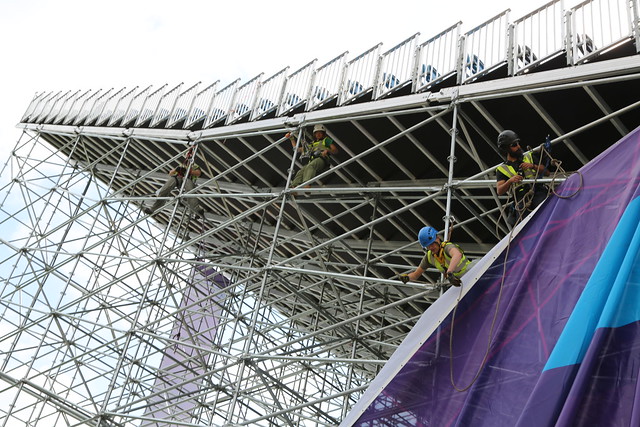
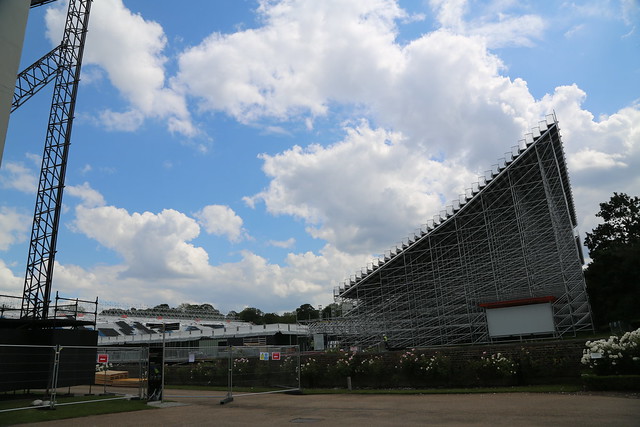
If permission is granted, work will begin in Spring 2010 to prepare the Cross Country course. A test event will begin setting up in June 2011 and will be removed by August 2011.

Setting up of the actual event will begin in March 2012. The majority of the park will be closed for public access from 6th July to 3rd August 2012, with only the Children’s Playground and parts of the Flower Garden remaining open during that four week period.

Removal of equipment and structures associated with the games will take place between September – October 2012, with a reinstatement programme beginning in November 2012. The estimated date for the completion of the restoration/replacement of large areas of acid grassland is 2015.

The planning application has received the support – ranging from the enthusiastic to the conditional – of Fédération Equestre Internationale (FEI), the London Borough of Lewisham, British Grooms Association, Pentathlon GB, British Equestrian Federation (BEF), Maritime Greenwich World Heritage Site Executive Group, National Maritime Museum, Greenwich Foundation for the Old Royal Naval College, Royal Parks, CABE and English Heritage.

It was opposed by the British Archaelogical Trust, the Blackheath Society and Garden History Society. The Woodland Trust and Friends of Greenwich Park were opposed to the Cross Country element of the plan.

The Greenwich Society urged the council to treat this only as outline permission. No to Greenwich Olympic Equestrian Events (NOGOE) submitted a petition of 13,000 signatures opposed.

2,099 individual letters were received by the Council in response to the planning application – 36 in support and 2,063 objections.

Local campaigners, NOGOE, had hoped that the Metropolitan Commons Act 1866 would prevent the Council giving permission for the Blackheath Circus Field to be used, thus scuppering the whole proposal, but council officials have batted away this complaint, saying the restrictions cited applied only to the historic “Commissioners” of the land.

They say “the functions of the Commissioners have not devolved to the Council. Accordingly, the section imposes no restraint upon the power of the Council to determine the planning application in accordance with the Town and Country Planning Act 1990.

The meeting will take place at the Town Hall in Woolwich on March 23rd at 7pm 6.30pm and is open to members of the public.

Spencer Drury on 2012, Schooling and the General Election: Interview Pt3

March 11, 2010 by Adam Bienkov  

This is part three of Adam Bienkov’s interview with Spencer Drury – Conservative candidate for the Greenwich & Woolwich parliamentary seat and leader of the Conservatives on Greenwich Council. Part one and part two were published on Tuesday and Wednesday of this week.

Olympics

Hosting the 2012 Olympics has a been a polarising issue in the borough, but the Greenwich Conservatives have so far been relatively quiet about it. Drury himself has mixed feelings about the Games.

He tells me that while the cross country equestrian events will be “fabulous for the park” and an “amazing event” he admits that “this is not the line that NOGOE would like to hear.”

However, he also thinks that the temporary stadium is a “sticking point”:

“The 20,000 seat stadium I have got serious questions about. I mean the fact that it’s a temporary stadium, I’m already thinking is that worthwhile? But where they’re planning on putting it will actually ruin the views down the park to Maritime Greenwich. I mean if you put a great big stadium in front of that then you’re ruining the very views that they seem to want. That seems to me to be self defeating.”

He also believes the Council have missed a big opportunity to capitalise on the Games.

“The Olympics have got tonnes of money and as far as I can work out Greenwich as an area is going to have no legacy from it. Well I mean I say no legacy, but there might be trees chopped down but no legacy from it in any positive physical way.”

So will the Games be good for Greenwich overall?

“Well if you could sort out the congestion as a legacy then I think that people in Greenwich would take the rough with the smooth but at the moment we are just getting the rough.   We’re just getting problems from it and we’re getting damage to a much valued park although I don’t think it will be as bad as NOGOE are making out. I really don’t feel that.”

Are NOGOE representative?

“I think they are representative of a certain group of people in Greenwich but when you go out knocking on doors, I mean I was out in Greenwich last weekend and not one person mentioned it to me. Not one person. Schools, bins and recycling are the things that come up. People are more concerneed about other things. I think that is why you won’t see political parties focusing on it in a major way because on the doorstep it is not the major issue that people are concerned about.”


Schools

I’m speaking to Drury after the announcement that the John Roan school will no longer be moved to the Peninsula. He is relieved:

“The plans to put the John Roan school on the peninsula were always ridiculous. They were planning to put a bigger school on a smaller site, five stories tall with a playground on the roof. It was madness.”

While pleased about this, he believes that it is symptomatic of a wider problem:

“The Council’s education policy is in chaos frankly. We’ve still got the worst GCSE results in London.  They’ve improved a lot but they’re still the worst in London. So our kids are leaving education at a substantial disadvantage to most other kids across London.  And that’a huge blow to us and a massive shame”

He supports the Conservative plans to create smaller “Free Schools” run by parents:

“Parental choice is absolutely vital in this and we know parental choice is already happening in Greenwich because so many hundreds of kids at eleven go out of the borough, whether to private or to Grammar schools.  But what’s interesting when you look at the figures is that they are not just going to the Grammar schools they are also going to Welling and other schools along the border with Bexley because they are better run than Greenwich schools frankly.”

The General Election

Drury is set to stand against Nick Raynsford in Greenwich later this year. I ask him if he knows him well. He tells me that while he sees him annually at the borough’s Remembrance Sunday event, he hardly ever comes across him otherwise:

“I think Clive Efford [Labour MP for Eltham] marked himself as a local MP who didn’t care about Westminster very much. Well I think that Nick Raynsford is the opposite to that. There is a local area. He’s aware that it exists, but Westminster is where his heart is.”

Like Efford, Drury has a close attachment to the area. Raised in Woolwich and a long standing councillor in Eltham, Drury still lives within the borough.

With boundary changes giving the Conservatives a real chance of winning Eltham, I ask him why he didn’t choose to stand in his home town again:

“I did [consider it] but it was for various personal reasons. My daughter had been in hospital for two months and then my wife became ill as well. It was in the run up to the selection for the parliamentary seat and I came pretty close to just packing it all in frankly. And ironically it was a letter from Chris Roberts asking if everything was okay that changed my mind.

“It made me think think that maybe politics isn’t just about doing silly stunts and playing silly games. That maybe there is a point to it”

Andrew Gilligan: Council Worried About Park Olympics

February 24, 2010 by Andrew Gilligan  

Lewisham Council has expressed serious concerns about the controversial plan to stage the Olympic equestrian events in Greenwich Park, we can reveal.

In an email obtained by greenwich.co.uk, Stuart Sharp, Lewisham’s highways development manager, raises a series of pertinent “areas of concern” about the ability of the local road and rail networks to cope with the spectator and competitor influx for the Games, particularly on the day of the cross-country event.

In the email to Greenwich Council, dated 18 February, Mr Sharp writes: “When does the major cross-country attraction occur – hopefully on a weekend? If it doesn’t, then given the predicted 75,000-plus crowd, plus two to three thousand workforce plus competitors all arriving 90 mins or earlier before the events start at 11am means that most will be attempting to travel… during the morning peak. Similarly, the reverse pattern could occur during the evening travel peak.”

The day of the cross-country event, 31 July 2012, is a Tuesday.

Mr Sharp says that even the Park’s “smaller” events – involving between 22,700 and 55,000 people – will place enormous demands on the local transport network. He protests that the Games organisers have done “no analysis of public transport capacity to absorb the predicted [number of] people requiring to travel to and from the site.”

He asks: “Is there sufficient timetable, line and platform capacity to cope with the predicted numbers, particularly on weekdays? How will bus operations be affected if the bus lanes in Romney Road are used for pedestrian movement? I can’t find any detail [in the plans] of park-and-ride strategy and direct coach arrival and departure arrangements.

“Where are the drop-off, pick-up and coach queuing points? Where will the 200-250 coaches park after drop-off and before pick-up? The [transport plan] suggests the site off Creek Road hitherto earmarked for the Greenwich Waterfront Transit depot – surely that won’t be big enough and will it still be available?”

A failure to set out important plans in sufficient detail is becoming a bit of a theme with the Greenwich Olympics. We still don’t know which trees will be affected by the promised “pruning” operations. We don’t know the full closure schedule. We don’t know where all the temporary buildings will go. We don’t even know exactly what the main arena will look like!

But the transport position is serious. Unlike north of the river, Greenwich is to see no transport capacity improvements (apart from a third car on the DLR.) The existing network will, in fact, be reduced in capacity by the likely creation of a competitors-only lane through the Blackwall Tunnel. As well as the visual, amenity and ecological damage to the park, and the damage to the tourist industry of seeing it closed for weeks, there now appears to be a risk of wider economic damage that the area’s roads and railways will seize up.

Locog’s coyness on transport detail is understandable: their fear must be that Mr Sharp’s questions are impossible to answer. But planning applications require detail. It was a lack of detail, as much as anything else, which doomed Greenwich Hospital’s application for the market redevelopment – and that application was rather fuller than the Olympic one.

As anyone who has used the area’s transport network during the rush hour will know, it is essentially at capacity, sometimes beyond. Although the Games will take place during the summer holiday season – and some of the travel will be against the peak flow – it is a further example of the way in which the Olympic organisers decided this venue on the basis of pretty pictures rather than serious examination.

Lewisham’s borough boundary comes within a few hundred yards of the park, and Mr Sharp’s email raises the fascinating possibility that the council could formally object to the application.

That possibility still seems remote – but it is a real indictment of Greenwich Council’s uncritical cheerleading for the Olympics that important objections are only raised by a neighbouring borough.

Council approves O2 as Olympic venue

February 18, 2010 by Rob Powell  

The Planning Board of Greenwich Council gave permission last night for the O2 to be used as a venue at the London 2012 Olympic and Paralympic games.

The dome, which will be known as the North Greenwich Arena at the time of the games, will play host to Artistic Gymnastics, Trampoline Gymnastics and the Basketball finals during the Olympic Games, followed by Wheelchair Basketball during the Paralympic Games.

The proposal got the unanimous backing of the Planning Board at last night’s meeting.

Sebastian Coe, Chairman of LOCOG said: “This is very good news and a vital step forward in our preparations for the Games. These venues are an important part of the cluster of sports being staged in Greenwich. North Greenwich Arena is without doubt an outstanding venue and will be a spectacular sporting stage in 2012.”

The Planning Board also unanimously supported the proposal to use Royal Artillery Barracks in Woolwich for shooting events at the 2012 Games.

LOCOG: Greenwich Park “most suitable and cost effective venue for the Equestrian Events”

February 2, 2010 by Rob Powell  

Following last week’s column by Andrew Gilligan (“Locog admits Windsor is a better venue“), London 2012 organisers have asked us to publish their response.

Andrew Gilligan is wrong to state that “LOCOG admits Windsor is a better venue” than Greenwich Park. We selected Greenwich Park as the most suitable and cost effective venue for the Equestrian Events and Modern Pentathlon events following a detailed evaluation of a number of potential venues by sporting and competition experts looking at all the requirements needed for an Olympic and Paralympic venue.

As part of our bid pledge we are committed to hosting a ‘compact Games’ with most venues within or near the Olympic Park in Stratford. The close proximity of Greenwich Park to the Olympic Park was a significant factor in the venue selection and this allows riders to be accommodated in the Olympic Village. There is more than adequate space for stabling in Greenwich Park and Circus Field and it is not true to claim that riders stay with their horses, they will stay in the Olympic Village.

As Tim Stockdale, Show Jumper, and member of the British Equestrian Team, said last November: “I am very impressed. I was not aware of the Greenwich Park’s sheer magnificence, tradition and heritage. It will be great to be able to stay in the Olympic Village as well so that the riders can be part of the action.”

The use of Windsor Park would result in a need for a second village to accommodate athletes for Equestrian because they would be competing over an hour away from the Olympic Village. The use of Royal Holloway College in Egham would not be a viable accommodation option for Windsor Park because it is already being used to accommodate rowers from Eton Dorney and canoeists from Broxbourne and will be full.

While Windsor Park was deemed to be adequately served by public transport it is only served by two overground links. In contrast, Greenwich Park is significantly better connected with four overground rail stations, the Jubilee line, the DLR and river services. This serves our commitment to host a public transport Games, and to allow better transportation links for spectators with minimised disruption for local residents.

Windsor Park scored well as an alternative venue in our evaluation, however, it was always a challenge to secure support for Windsor Three Day Event from the athletes and the sport because of the historically poor ground for the cross-country. In contrast, Greenwich Park has the full support of the International Equestrian Federation (FEI), the International Modern Pentathlon Federation (UIPM), the British Equestrian Federation (BEF) and Pentathlon GB.

Windsor Park does not have the infrastructure in place to host all the facilities associated with an event of this scale, for instance accommodation and catering facilities for over 200 grooms, offices and meeting space for officials, hospitality spaces and a media centre. There would be a requirement to create significant temporary facilities to host these functions, whereas all of these facilities can be housed within the existing buildings at Greenwich such as the National Maritime Museum, the Queens House and the Devonport House Hotel.

In addition, if the Equestrian events were located outside London, another London venue would have to be found to host Modern Pentathlon because all disciplines have to be completed in one day. This would not be as simple as using an existing stadium, because Olympic venues consist of many additional back of house elements which in this case would need to include stabling and training areas for the horses. Providing this for just two days of competition, when such duplication can be avoided by sharing the Greenwich facilities, would not represent cost effective delivery of the Games. It should be noted that in fact three of the five modern pentathlon events take place at Greenwich Park, not just the riding element.

Mr Gilligan is being emotive in claiming large parts of Greenwich Park will be closed for eight months and smaller parts for five years. The Park will only be closed off for four weeks in total, with the Children’s Playground and large parts of the Flower Garden remaining open apart from the days around the Cross Country event. We are clear in our planning application that all ground works related to the Games will be completed by November 2012. After the Games, The Royal Parks will implement an acid grass restoration and enhancement programme which will be funded by LOCOG. This will improve the quality and extent of the acid grassland in Greenwich Park, and will not inhibit regular use of the Park.

Andrew Gilligan: Locog Admits Windsor Is a Better Venue

January 27, 2010 by Andrew Gilligan  

TODAY is the official deadline to object to the stupidest planning application since somebody tried to build a life-sized copy of Buckingham Palace out of processed cheese. The Olympics want to come to Greenwich Park, and aren’t we all thrilled? No, actually: of the 286 responses received by the council so far, 265 – or 92.7 per cent – are against.

That won’t be the final figure – there are some big wodges of objections still to be registered – and in practice you can carry on submitting objections until just before the planning meeting, which I strongly recommend. Over the next few weeks, as councillors look through the application, I’ll be unpicking some of its key weaknesses.

Let us start this week with London 2012 (Locog)’s legal obligation (under the Environmental Impact Assessment Regulations) to assess alternative sites and explain why Greenwich Park is better. A potentially tricky task, you might think, given that (a) the alternatives are spacious existing equestrian courses, used to hosting tens of thousands of spectators and (b) Greenwich Park is a cramped, totally virgin site, needing to be transformed from scratch, that has never handled such an event in its life.

The assessment is given in chapter 4 of Locog’s environmental statement, the key planning document (downloadable from the council website). The criteria include the ability to use “existing facilities where possible;” the ability to “provide facilities which meet International Federation and IOC standards;” the ready availability of public transport, the need to ensure “no potentially significant impact on amenity for local residents” and the need to avoid “potentially significant environmental constraints.”

That’s clear enough, then – Windsor Great Park it is! As the document admits, Windsor “has existing facilities which could be used… there are public transport services… approximately 0.3 miles from the venue… there would be no temporary loss of public amenity.”

The stunning fact is that even in Locog’s own assessment, Windsor scores higher than Greenwich Park on facilities and the ability to host the contest, and the same on all the other criteria I’ve mentioned.

And the reality, of course, is that Windsor outscores Greenwich on most of those other criteria too. Completely dishonestly, the Locog assessment scores Windsor and Greenwich the same for “impact on amenity for local residents.” But while large parts of Greenwich Park will be closed for eight months, and smaller parts for five years, no local resident in Windsor would lose a single inch of park for so much as a single day if the Olympics were held there. As the document itself admits, the Windsor site which would be used for the Games “is not currently open to the public.”

Furthermore, the number of local residents around the Windsor site, though not nil, is vastly lower than the number of people living around Greenwich Park, and the traffic problems the event would cause in Windsor are far lower than in Greenwich.

Equally dishonestly, Windsor and Greenwich are given the same score for “environmental constraints.” But they would not have to chop bits off any trees to put in a cross-country course at Windsor, or level any ground to build a showjumping arena.

Horse on Greenwich Park

There is, admittedly, one criterion I haven’t mentioned on which Greenwich scores higher than Windsor – that of “close proximity to the Olympic Park.” The sole, slender thread justifying the despoilation of Greenwich is the mantra of a “compact Games” with riders able to live in the Olympic village and be “competitors, not commuters.” But this is simply not a good enough reason to ignore the advantages of Windsor.

Most riders will, in any case, not live in the Olympic village – they will stay with their horses; and since Greenwich Park is too small to stable them all, many are likely to be widely dispersed across south London. Even the Olympic village is a 25-minute commute away from Greenwich Park. The planning application predicts there will be 35,000 competitor vehicle movements to the Park during Games time – also suggesting that there will be a certain amount of commuting going on.

If the “compact Games” slogan were taken to its logical extreme, we would have the rowers on the Thames at Woolwich – never mind if they drowned in the tides or got run over by the ferry. The rowers are, in fact, going to – well, quite near Windsor, as it happens. They won’t be wedged into the Olympic village – they’ll be in spacious and almost-new student accommodation blocks at Royal Holloway College, in Egham. If the equestrianism was at Windsor, the riders could be there, too

The fact is that the riders could stay much closer to their competition venue in Windsor than in Greenwich. Royal Holloway College is five minutes’ drive from Windsor Great Park – and, contrary to another dishonest claim in the planning application, there’s plenty of room.

The only other argument produced for choosing the massively inferior site at Greenwich is the need to host the showjumping element of the modern pentathlon in London. This is true, but a red herring. The riding part of the modern pentathlon does need to be in London to be near the other four sports which make up the event. But a pentathlon riding arena is far simpler and cheaper than an equestrian one, reflecting the fact that the entire horse part of the pentathlon takes just three hours over the whole Games (90 minutes each for men and women.)

This year’s modern pentathlon World Championships – a “class A” event equivalent to the Olympics – are being held in the athletics stadium at Crystal Palace at a total cost to the taxpayer (for all five events, not just the riding) of £660,000. They could put the horse bits of the pentathlon there, or in The Valley – or indeed in a big enough back garden.

In short, Locog is asking for planning permission for a venue which is not just destructive, but which even they concede is inferior to the alternatives.

19th century law will ’scupper LOCOG’s plans’, says NOGOE

January 14, 2010 by Rob Powell  

London 2012 plans to use land at Blackheath as part of their planning application are unlawful and Greenwich Council do not have the power to even “entertain” the proposal, a local pressure group has claimed.

London 2012 submitted their planning application to Greenwich Council in December and it contained proposals to make use of the Circus Field at Blackheath with a fenced compound to house canteens, horse boxes, stables and training areas. But NOGOE (No to Greenwich Olympic Equestrian Events) claim that two laws dating back to the 19th century will make this impossible.

A retired solicitor, Lionel Lewis, and local historial, Neil Rhind, have carried out research into whether use of the land would be permssable, and claim that enclosure of the land is prohibited generally, and those managing the Heath only have the power to install an enclosure for the “shortest period of time for the purpose only of repair of the grasses”.

The two laws they say will ’scupper LOCOG’s plans’ are the Metropolitan Commons Act 1866 and the Supplemental Act for Blackheath of 1871

The Metropolitan Commons Act 1866 states:

The Commissioners shall not entertain an application for the inclosure of a metropolitan common under the control and management of a London borough council, or any part thereof; . . . and notwithstanding any proceedings taken under any Act other than this Act, or any provisional order of the Commissioners made but not already confirmed by Act of Parliament, proceedings may be taken under this Act in relation to any metropolitan common.”

Blackheath was then designated as a “metropolitan common” in the Supplemental Act for Blackheath of 1871.

NOGOE’s Coordinator, John Hine commented:

“We are most impressed with the careful research that has been carried out by Lionel and Neil. They have developed what seems to be an unarguable case, which we expect the Council to endorse. We always said that Greenwich Park was too small and since LOCOG are unable to use Circus Field, it should do the decent thing and take the events to a venue which does have the space, but not the fantastic heritage that they wish to destroy at Greenwich.”

A spokesperson for LOCOG told Greenwich.co.uk

“We disagree with what NOGOE/Lionel Lewis says about the use of Blackheath. The legal provisions that NOGOE has pointed to have nothing to do with Greenwich Council’s ability to consider our planning
application. Greenwich Council has confirmed that it will be considering our planning application in the normal way

We will of course be seeking any necessary consent for the use of the land in due course.

We have gone into a huge amount of detail about in our planning application about all our proposals, and we would not have submitted this if we believed it was not legally sound

We have confirmed that Greenwich Park will not be closed for more than four weeks at Games time and that we will return Greenwich Park to The Royal Parks in the state in which we received it. The use of Blackheath is nothing to do with the claim that Greenwich Park is too small, it is all about operational use and causing less disruption to the Park itself.”

NOGOE to hold public meeting

January 12, 2010 by Rob Powell  

NOGOE – the local pressure group against the use of Greenwich Park for the equestrian events of 2012 – are to hold a public meeting this weekend.

The meeting will be an “open discussion” and you are invited to go along and “have you say”. NOGOE say that the meeting will be “the one that LOCOG never held”.

Local councillors and planning officers have been invited to the meeting which will take place at the John Roan School (Maze Hill site) on Sunday (17th) afternoon from 2pm to 4pm.  The phone number for any enquiries about attending is  020 8853 2567.

Nick Raynsford – Nobody Likes a Bad Loser

December 16, 2009 by Andrew Gilligan  

WHEN you’re in an argument with someone, there are two clear signs that they’re losing. The first is when they resort to abuse – and the second is when they have to distort your case to buttress their own.

In their battle to knock down Greenwich Market, Nick Raynsford MP, the Greenwich Society and the forces of development did both those things – and did, indeed, lose. So it’s rather encouraging to see them reprising exactly the same tactics over the Greenwich Park Olympics.

In an article for this website last week, Mr Raynsford accused Nogoe, the anti-Olympics group, of “scaremongering” and a “complete misrepresentation of the facts.” His evidence? A poster they issued, with a picture of the open area in front of the National Maritime Museum, and beneath it the statement that “this will be a no go area in 2012 for several months.”

It is actually Mr Raynsford who is distorting the facts here. As last week’s planning application confirms, the area depicted in Nogoe’s poster will indeed be closed – for eight months.

Mr Raynsford attacks Nogoe for “continuing to perpetuate the myth that the park would be closed in a BBC report in October this year, when a spokeswoman said it would be ’socially and morally wrong’ for the park to be closed, despite knowing that this would not be the case.”

The actual BBC report quotes Nogoe’s spokeswoman as saying that it would be socially and morally wrong to close the park during the games. And as last week’s planning application confirms, it will indeed be closed during the games.

The outline facts of the Park’s closure are actually quite uncontested. They have been established everywhere outside the mind of Nick Raynsford for more than a year now. And what the further details published last week show is that, far from “scaremongering,” Nogoe have significantly understated the problems the Olympics will cause.

Forty-two thousand vehicle movements in the park, including more than 6,000 lorry movements; five years of works, starting next spring; the park sliced up with fences for most if not all of that time; full restoration of the park only in 2015. And the more I pore through the planning documents, the more horrors emerge – details to follow.

What other distortions have the pro-Games forces been guilty of? Mr Raynsford describes one survey showing an improbable 85% support for the Games as “independent polling.” Actually, it was a voodoo poll. It was market research, not done to the standards of a professional opinion pollster. It was carried out for Locog, and it was packed with questions so comically loaded that 85% must in fact have been a very disappointing result.

Locog, in another of last week’s ripostes, claimed that “all work related to the Games will be completed by November 2012,” other than the acid grass restoration programme by 2015. Not true: the “amenity grassland” across much of the park will be fenced off until spring 2013.

They also say that the extent of tree pruning will be “minimal” and “routine.” I think the trees which will suffer a “removal of branches to the main stem” might quarrel with that.

In this debate and others Nick Raynsford, in particular, is in danger of becoming ridiculous. Not long ago, he was quoted as saying that he had “no doubt” that the redevelopment of Greenwich Market would succeed on appeal and would be built. The proposal was in breach of so many council and Government planning policies, and its rejection by councillors was so comprehensive, that it in fact seems rather unlikely to win an appeal, or to be built in its current form.

Economics have also turned against the development. At the same meeting that councillors refused the market redevelopment, centred around a huge new hotel, they approved a large new hotel on Greenwich High Road. They’re also currently considering another hotel proposal – the conversion of the upper floors of the Trafalgar pub. So any new hotel in the market now faces even greater challenges to its commercial viability.

Mr Raynsford’s instinct for distortion was also on hand over the market, with a claim that opponents had said Turnpin Lane would be destroyed. Nobody had said anything of the sort, of course. In psychoanalysis, this sort of behaviour is known as “Freudian projection” – when you project on to others the faults and flaws you sense in yourself.

Mr Raynsford may be able to inhabit his own private fantasy world for the majority of the parliamentary term. But with no more than six months before he must face his voters, it seems a rather unwise place for him to be at the moment.

LOCOG Respond to Andrew Gilligan

December 11, 2009 by Rob Powell  

LOCOG have issued the following statement to Greenwich.co.uk in response to Andrew Gilligan’s latest article.

LOCOG believes that Greenwich Park will be a stunning venue for the Equestrian and Modern Pentathlon events in 2012. We take our responsibilities very seriously and our planning application shows the detailed work we have carried out on all aspects of our plans for Greenwich Park. We will make sure that we return the Park in the condition in which we receive it, and we have fully involved The Royal Parks and English Heritage in the development of all studies and plans.

Closure of areas of the Park

  • The majority of the Park will remain open until July 2012.
  • There will be some scheduled closure of the north end of the Park for the Test Event but this will re-open afterwards. Installation of the temporary arena is estimated to begin in April 2012.
  • We have listened to people’s concerns and have reduced the time of full closure for the Park from six to four weeks, from 6 July to 3 August 2012.
  • The Children’s Playground, the Deer Park and the majority of the Flower Garden will remain open throughout, apart from the one day that the Cross Country event will take place.
  • The Park will not start closing from February 2010. Over the next two years, small sections of the Park will be cordoned off to allow ground improvement works to take place. Much of this is similar to the activity that routinely takes place already as part of The Royal Parks’ ground programme, such as mowing and aerating. It will have little impact on visitors to the Park who will still be able to access all areas freely, except for a narrow strip of ground in certain places.
  • We are clear in our Planning Application (Environmental Statement: Section 3.2. Table 3.2 – Indicative programme and extent of public access) that all works related to the Games will be completed by November 2012, other than the Acid Grass Restoration and Enhancement programme which is due for completion in 2015. The amenity grass affected by our activity in the Park will be reinstated within six months.
  • The Acid Grassland Restoration and Enhancement programme is a substantial three-year programme to improve the quality and extent of the acid grassland within the Park. This is a long-term programme to improve significantly the amount and quality of the acid grasslands in the Park, thus improving the Park’s ecology and offering a real legacy benefit.  This is fully supported by The Royal Parks.
    Lorry and vehicle movements
  • For planning purposes we have assessed the number of lorry movements on the basis of the maximum upper limit we may need to use.
  • On this basis the upper limit of lorries or lorry movements required is estimated as 3,210 over a period of 26 weeks. This is an average of 43 per day and 7 per hour for the 15 weeks of set-up, and an average of 58 per day/9 per hour for the 11 weeks of removal.
  • The Environmental Statement Non Technical Summary page 17 states that “Given the relatively low daily vehicle flows involved it is considered that vehicular traffic associated with the set up and removal of the event facilities would have an insignificant effect.  A maximum of seven lorry movements per hour is predicted which is anticipated to have no noticeable impact on the operation of the highway network.”
  • As a construction project in London, we anticipate that a Traffic Management Plan will be a condition of planning approval. This will ensure that affected local residents are kept informed and that measures are taken to minimise the impact of traffic movements. For example, minimising movement at sensitive times of the day and dispersing them throughout the week.
  • We have already said that there will be no residential road closures and Romney Road will remain open.

Heritage impact

  • Loss of heritage features, or preserving by record, are references to what might happen if we were to discover any previously unknown historical or archaeological items that the relevant historical or cultural authorities do not want to keep because they are of such low significance to warrant doing anything other than recording them.
  • If we find anything during our work in the Park we will, of course, preserve and protect it. We will be guided at all times by the appropriate authorities.

Visual impact and trees

  • The proposed perimeter security fence will run inside the existing perimeter wall for the Park. The majority of it will not be seen from outside the Park. Lighting for CCTV will be very low level.
  • No trees will be removed. All trees will be protected in accordance with BS 5837:2005 Trees in relation to construction. A full Tree Protection Plan will be put into effect in partnership with The Royal Parks.
  • Some minor tree pruning is unavoidable but it will be undertaken on a case by case basis with input from an arboriculturist accustomed to working in historic landscapes and in partnership with The Royal Parks. The extent of this pruning is minimal, the majority involving just branch tips, and arboricultural experts have confirmed that the proposed work poses no threat.
  • Minor pruning of this nature takes place routinely as part of The Royal Parks’ normal maintenance programmes.

Legacy

  • The Environmental Statement states that ‘The extent to which legacy benefits are generated by the Greenwich Park Events rather than the 2012 Games as a whole is not clear’. The Environment Statement is part of a formal planning application and as such is required to use quantifiable methodology.
  • We are not surprised, three years out from the Games, that this scientific data is not available. We have always said that hosting the Olympic and Paralympic Games in Greenwich provides a legacy of increased global profile for the Borough and inspiration for its residents, and will bring sport  to new audiences across the Borough and London. We fully recognise that it will take years to quantify the legacy effects of hosting the Games.
  • Nevertheless, the Statement, written by independent planning specialists, clearly identifies that ‘Greenwich Council is actively promoting a range of sports activities and programmes using the 2012 Games to inspire local children and residents to  become more active. The Council is also working with a number of sports governing bodies which are holding events in Greenwich in 2012 to develop opportunities to create meaningful long-term benefits’. This activity and investment has been driven by hosting the Games.
  • Greenwich Council is also working with the British Equestrian Federation’s HOOF project to develop a riding school for the borough, potentially at a site on Shooters Hill.
  • LOCOG is also in discussion with The Royal Parks about leaving behind a permanent legacy feature in Greenwich Park, such as an upgrade to the Children’s Playground. In addition to this, working in partnership with The Royal Parks, we will deliver on our commitment not only to reinstate but in fact to leave a larger area of high-grade acid grassland post-Games than currently exists. This is a long-term environmental legacy for Greenwich Park and, of course, requires a period of growing seasons to establish.
  • The Borough of Greenwich has also already benefited from an £80 million investment in the Docklands Light Railway to extend the line to Woolwich and increase carriage provision by 55 carriages.

Public support

  • We have no interest in ‘rigging’ figures. The research referred to was conducted independently for LOCOG by The Nielsen Research Company. Nielsen is one of the largest research companies in the world. The research complies fully with the MRS code of conduct.
  • The 81% figure in the Evening Standard poll referred to is not a specific figure representing the residents of Greenwich. The research that LOCOG commissioned was directed at local residents and was aimed at understanding their local feelings. These two polls therefore are not comparable.
  • These figures and the methodology of the Nielson survey are robust. They demonstrate the wide support for the Games in Greenwich, subject to certain conditions which we are fulfilling – specifically, closure lasting no more than six weeks and no long-term damage to the Park.

Next Page »

Hotels in Greenwich
Get a takeaway delivered in SE10
Useful content for Greenwich businesses